
On the night of March 8, 1971, most of America was listening to the Fight of the Century, Muhammad Ali against Joe Frazier. Eight people in Media, Pennsylvania spent that evening differently. While the guards were following the fight, they picked the lock of a small FBI field office and carried out more than 1,000 internal documents.
The files described a secret FBI program called COINTELPRO: years of illegal surveillance, infiltration and sabotage aimed at civil rights groups, antiwar activists and political dissidents. Before that night, anyone claiming the FBI was running such a program would have sounded like a conspiracy theorist. After that night, it was documented fact.
The Media burglars were never caught. They stayed anonymous for 43 years and only revealed themselves in 2014, long after the statute of limitations had run out.
Stories like this one are the fuel every conspiracy theory runs on. If the FBI really did that, why not the rest? It is a fair question, and it has an answer. The real conspiracies and the imagined ones look different in a few reliable ways, and the difference is mostly arithmetic.
The ones that were real
COINTELPRO is not the only case where the paranoid version of events was the correct one.
From 1953 on, the CIA ran a program called MKUltra: covert experiments on human subjects with drugs, hypnosis and psychological pressure, searching for methods of mind control. Many subjects never knew they were part of an experiment. The program was investigated in 1975 by the Church Committee of the US Senate, and a Senate hearing in 1977 put the surviving records on the table.
Surviving is the right word. In 1973, CIA director Richard Helms had ordered the MKUltra files destroyed. About 20,000 pages escaped the purge for a mundane reason: they had been misfiled in a financial records building and nobody found them until a Freedom of Information Act request surfaced them in 1977. Most of what is publicly known about MKUltra today rests on that filing error.
Then there is the Tuskegee syphilis study, possibly the darkest entry on this list. Starting in 1932, the US Public Health Service enrolled 399 Black men with syphilis in Alabama and studied the course of the disease without treating them, and without telling them what they had. The study kept going even after penicillin became the standard cure in the 1940s. It ran for 40 years, until Jean Heller of the Associated Press broke the story in July 1972. President Clinton formally apologized in 1997.
And the pattern continues into the present. In June 2013, documents leaked by Edward Snowden showed the NSA was collecting the phone records of millions of Americans and tapping data from the big internet platforms, programs the government had not admitted to before The Guardian and The Washington Post published them. In 2015, the US Environmental Protection Agency caught Volkswagen with software built to cheat emissions tests, installed in about 11 million diesel cars worldwide.
What the real ones have in common
Look at how each of those secrets died. COINTELPRO was exposed by eight outsiders and a crowbar. Tuskegee was exposed by a journalist after a health worker passed her the files. MKUltra fell apart under a Senate investigation. The NSA programs were carried out of the building by one contractor with a USB stick. Watergate, the scandal that made the word famous, unraveled within two years of the break-in.
Real conspiracies leak. They involve a limited circle of people, they run for years rather than generations, and they end the way secrets end: an insider talks, a document surfaces, an investigator gets lucky.
In 2016, the physicist David Robert Grimes turned that observation into an equation. Using data from real exposed conspiracies, he modeled how long a secret can survive depending on how many people have to keep it. His conclusion: plots involving more than about 1,000 people rarely stay hidden for more than a decade.
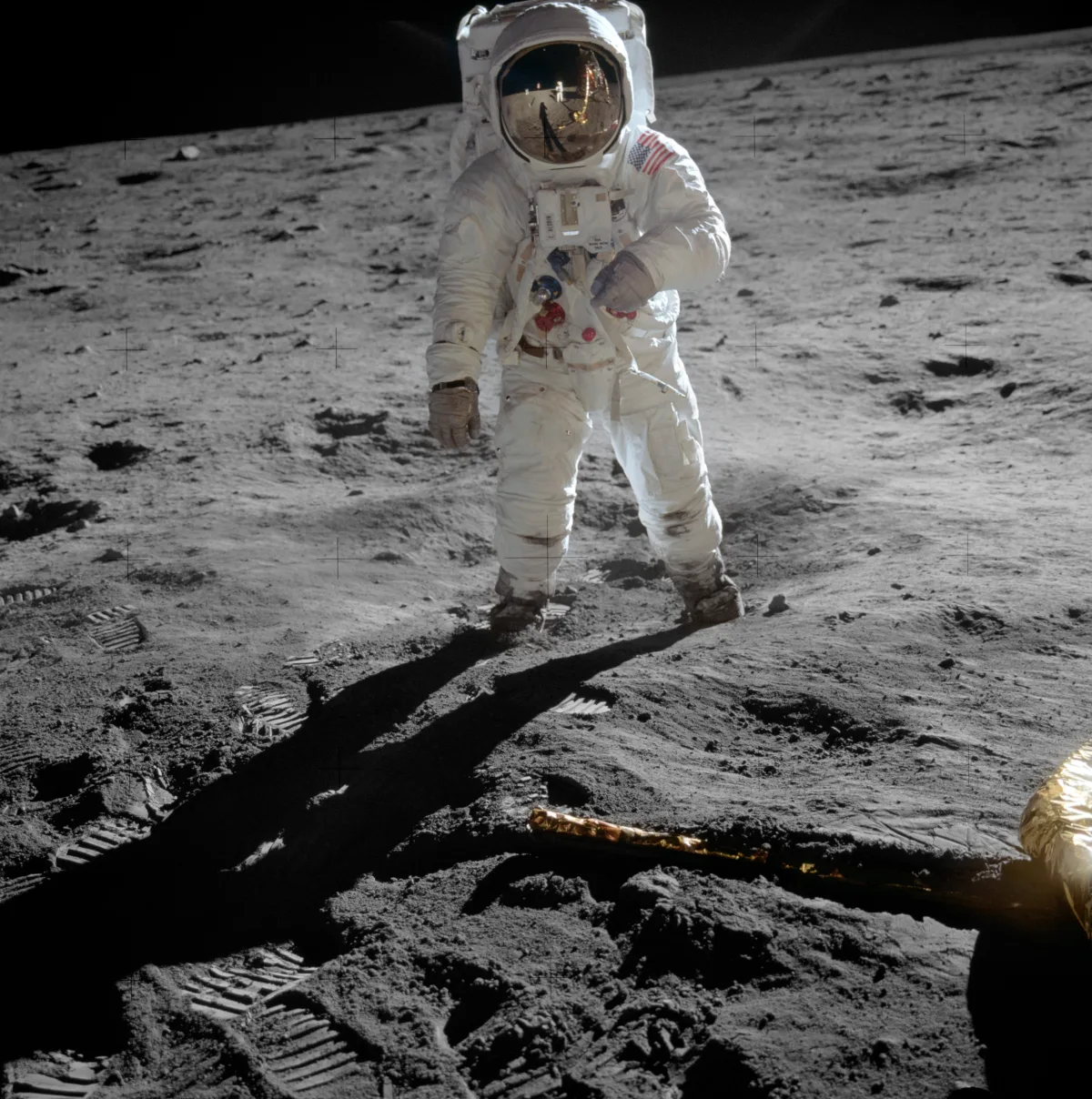
Grimes ran the numbers on a faked moon landing. With roughly 411,000 NASA employees at the program's 1965 peak, his model gives the hoax less than four years before someone spills it. The landing was 57 years ago.
The ones that break
That headcount problem is exactly where the famous conspiracy theories collapse.
A flat Earth requires every space agency on the planet to fake its imagery in perfect agreement, including rival states that would love to expose each other. It also has to explain why the curvature was already measured around 240 BC, when the Greek scholar Eratosthenes worked out the Earth's circumference using shadows and geometry, and why amateurs have reproduced the result ever since.
A faked moon landing has an even sharper problem: its best witness is the Soviet Union. The USSR tracked the Apollo missions with its own radar in the middle of the space race, had every propaganda reason to cry fraud, and never did.
Microchips in vaccines fail at the physics. Even passive RFID chips, the kind with no battery, need an antenna too large to pass through the bore of an injection needle, and a chip in tissue would show up on any X-ray or ultrasound.
A hollow Earth fails against the seismographs. Earthquake waves travel through the planet in a way thousands of measuring stations in dozens of countries record every day, and for over a century they have drawn the same picture: layered and decidedly not hollow.
And the Bermuda Triangle fails against an insurance company. Lloyd's of London charges no higher premium for that stretch of ocean, and the US Coast Guard has stated repeatedly that ships and planes do not disappear there more often than in comparable waters.
The half-true ones
The most durable theories are the ones wrapped around a real core.
Area 51 exists, and it really was one of the most secret places in America. The CIA only officially acknowledged the site in 2013, in a declassified history of the U-2 spy plane program. Secret aircraft were tested there for decades, which explains both the secrecy and the strange lights people kept seeing. The aliens were never needed.
Nazis really did escape to Argentina after 1945, Adolf Eichmann and Josef Mengele among them. That true story keeps the "Hitler escaped too" version alive. For Hitler himself, the evidence says otherwise: in 2018, a French forensic team led by Philippe Charlier matched teeth kept in Russian archives to Hitler's 1944 dental X-rays and concluded he died in Berlin in 1945.
Election fraud exists as well, in the small, local, prosecutable form. The leap from there to a centrally rigged national election is where the arithmetic returns: thousands of local poll workers, rival parties and courts would all have to cooperate silently, and recounts and audits after disputed elections keep confirming the original results.
Telling them apart
The test that separates the two categories fits in two questions. How many people would need to stay silent, and for how long? Real exposed conspiracies score low on both: dozens of insiders, a few years, then a leak. The famous theories need thousands or millions of insiders, across rival countries, for generations, with not one deathbed confession.
There is a second tell: real conspiracies are eventually provable, with documents, hearings and court records. Theories that survive decades without producing a single verifiable document usually explain everything after the fact and predict nothing that can be checked.
Why our brains still find the theories attractive is its own research field. The psychologist Rob Brotherton walks through it in Suspicious Minds: Why We Believe Conspiracy Theories * (affiliate link), a book arguing that conspiracy thinking is a side effect of how everyone's mind works, no fringe defect.
The Media burglars, by the way, would agree that healthy suspicion has its place. The difference is what they did with theirs: they went and got the documents.
The timeline
-
1932
The US Public Health Service begins the Tuskegee syphilis study. It will run untreated for 40 years.
-
1953
The CIA launches MKUltra, covert mind-control experiments on often unwitting subjects.
-
1971
Eight burglars empty an FBI office in Media, Pennsylvania on fight night. The stolen files expose COINTELPRO.
-
1972
Jean Heller of the AP breaks the Tuskegee story. The study is shut down.
-
1973
CIA director Richard Helms orders the MKUltra files destroyed. About 20,000 misfiled pages survive.
-
1974
Watergate forces Richard Nixon to resign, two years after the break-in.
-
1975
The Church Committee investigates CIA and FBI abuses; a 1977 Senate hearing details MKUltra.
-
2013
Snowden's leaks reveal NSA mass surveillance. The same year, the CIA officially acknowledges Area 51.
-
2015
The EPA exposes Volkswagen's emissions cheating software, built into about 11 million cars.
-
2016
Physicist David Grimes publishes his conspiracy equation: big plots don't keep.
-
2018
A forensic study of Hitler's teeth ends the escape-to-Argentina theory.
Sources
- Wikipedia: Citizens' Commission to Investigate the FBI
- Democracy Now: The Burglary That Exposed COINTELPRO
- FBI Records Vault: COINTELPRO
- US Senate, 1977 hearing: Project MKULTRA, the CIA's Program of Research in Behavioral Modification
- National Security Archive: The Top Secret Testimony of CIA's MKULTRA Chief
- CDC: About the Untreated Syphilis Study at Tuskegee
- The Guardian: NSA Collecting Phone Records of Millions of Verizon Customers Daily
- US EPA: Volkswagen Clean Air Act Violations
- Grimes, PLOS ONE 2016: On the Viability of Conspiratorial Beliefs
- National Security Archive: The Secret History of the U-2 and Area 51
- Charlier et al., European Journal of Internal Medicine 2018: The Remains of Adolf Hitler
- NOAA: What Is the Bermuda Triangle?
*Affiliate link. As an Amazon Associate I earn from qualifying purchases.